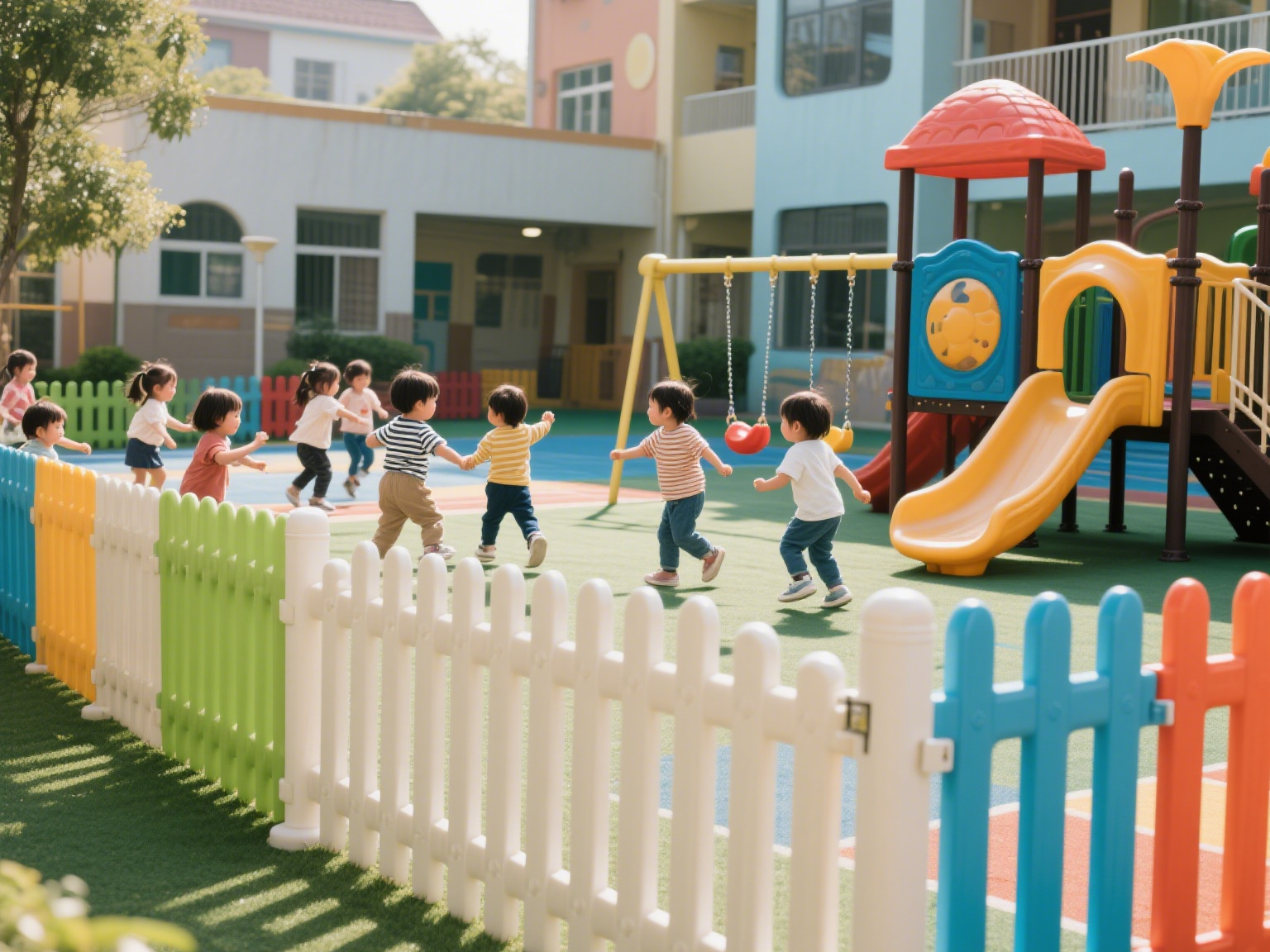
In an era where child safety is a top priority for parents, schools, and caregivers, the demand for reliable protective barriers has never been higher. PVC fences, once primarily associated with durability and low maintenance, are now emerging as the go-to solution for safeguarding children, thanks to their innovative design and stringent safety features.
Material Safety: Meeting Stringent Industrial Standards
At the heart of PVC fences’ safety lies their use of medical-grade raw materials. Manufacturers are now employing PVC that adheres to the same standards as children’s toys. These materials have passed rigorous tests such as FDA certification in the United States and EN71-3 in the European Union, ensuring that even if a child chews on the fence, no harmful substances will be released. Dr. Emily Carter, a pediatric toxicologist, emphasizes, “Traditional materials like wood may contain formaldehyde, and metal fences pose a risk of heavy metal leaching. PVC fences made with food-contact-grade materials eliminate these concerns, providing a safer alternative.”
To combat the effects of long-term sun exposure, manufacturers incorporate UV stabilizers directly into the PVC raw materials during production. This not only prevents the fence from becoming brittle and producing sharp fragments but also extends its lifespan. Customers can further enhance safety by choosing thicker PVC panels, upgrading from the standard 2mm to a more robust 3.5mm option.
Structural Design: Proactive Risk Elimination
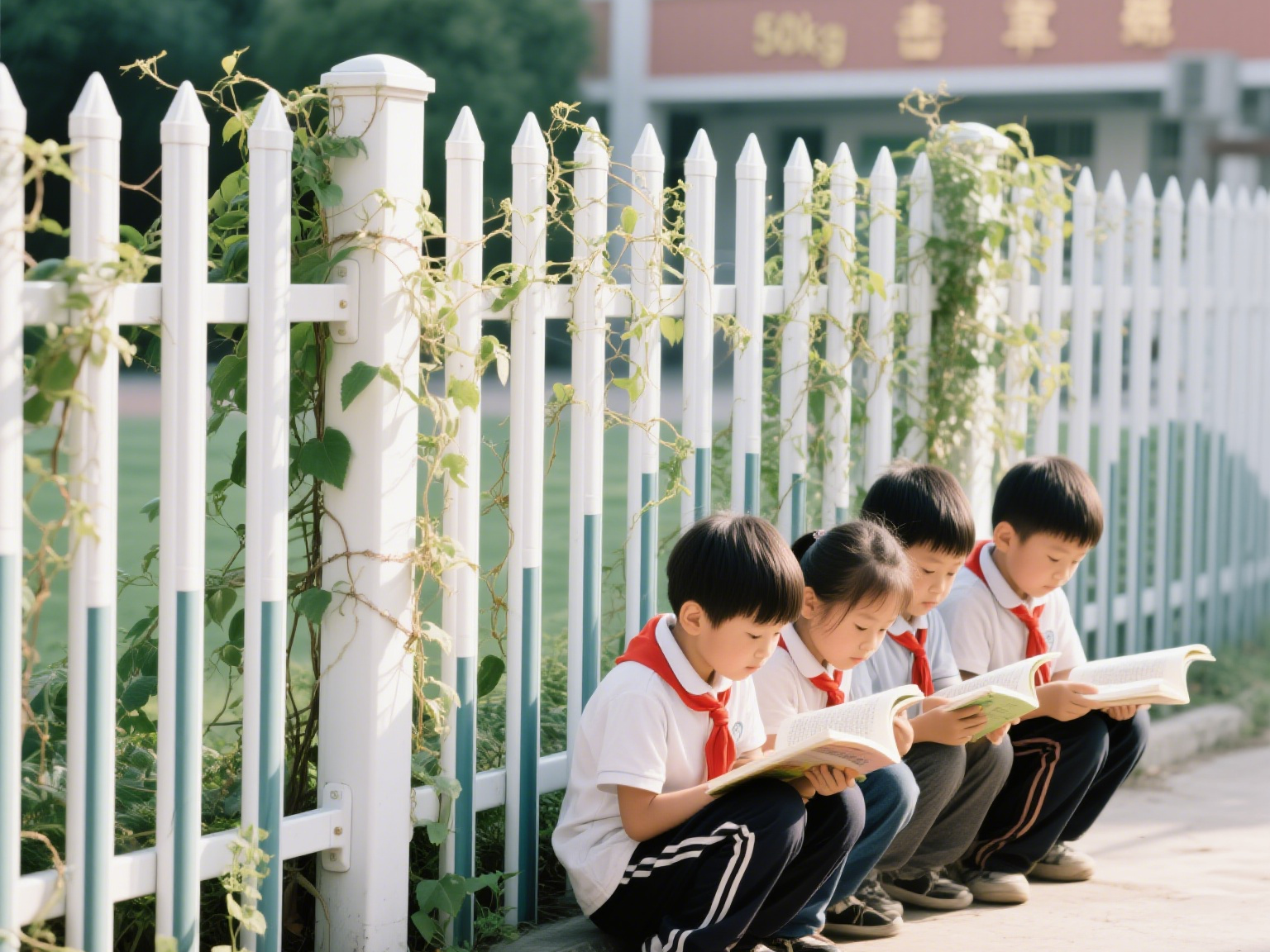
The structural design of PVC fences is a testament to meticulous safety engineering. Every edge and corner undergoes R10 rounding at the factory, a process that creates a 10mm – radius curve, surpassing the international safety standard of R5. Maria, a California-based mother, shared her experience, “My 2-year-old son accidentally ran into the PVC fence. To my relief, he only had a slight red mark, with no cuts or bruises. The rounded edges truly made a difference.”
The installation system is another highlight. Using hidden snap – on fasteners, PVC fences eliminate exposed screws and metal parts, reducing the risk of scratches. The patented anti – pinch hinges ensure that the gap between the door and the frame is less than 4mm, significantly narrower than the average diameter of a child’s finger (8mm). Moreover, these fences have withstood a 50kg impact test in the factory, simulating the force of a running child. Instead of breaking into sharp pieces, the panels only bend elastically, protecting children from potential injuries.
Customization Options: Tailored Safety Solutions
PVC fence manufacturers offer a range of child – specific customization options. For example, fences can be customized to a height of 1.8 meters and designed with a 15° inward – sloping top to prevent climbing. The vertical bar spacing can be set to less than 10cm, effectively preventing a child’s head from getting stuck. For families with special needs, TPU cushion strips can be added to provide extra impact absorption, although advance notice is required for this option.

Answering Parents’ Top Concerns
A recent survey showed that 83% of parents had concerns about the security, cleanliness, and temperature – resistance of children’s fences. Manufacturers have addressed these worries head – on. The double – locking system on PVC fences requires adults to press and rotate simultaneously to open, and a kindergarten fence customized for German clients has even passed the TÜV anti – disassembly certification. In terms of hygiene, PVC is resistant to bleach, as proven by sodium hypochlorite immersion tests, making it easy to clean with disinfectant wipes. Regarding heat resistance, the calcium – zinc thermal stabilizer formula used in PVC fences ensures that at 60°C, the VOC (volatile organic compound) emission is only 0.02mg/m³, well below the EU toy standard of 0.05mg/m³.
A Secure Chain from Factory to Home
To guarantee the safety of every PVC fence, manufacturers implement a comprehensive quality control process. Each batch of PVC powder comes with an SGS inspection report. During production, an automated system rejects panels with inconsistent thickness. Before shipping, every fence undergoes a manual edge inspection, and customers are provided with inspection videos, ensuring complete transparency and peace of mind.
As awareness of child safety continues to grow, PVC fences are redefining the standards for protective barriers. With their combination of safe materials, intelligent design, and customizable features, they offer a holistic safety solution that gives parents and caregivers the confidence they need to protect the little ones in their care.