
The fence industry is undergoing an unprecedented transformation, and PVC fences, with their strong plasticity and controllable costs, have become a testing ground and breakthrough for numerous technological innovations. The emergence of these innovative technologies has not only reshaped the functional boundaries of PVC fences but also injected strong vitality into their competitiveness in the future market, driving PVC fences to advance vigorously towards high performance, intelligence, and greenization.
1. Smart PVC Fencing Systems: Ushering in a New Era of Security Protection
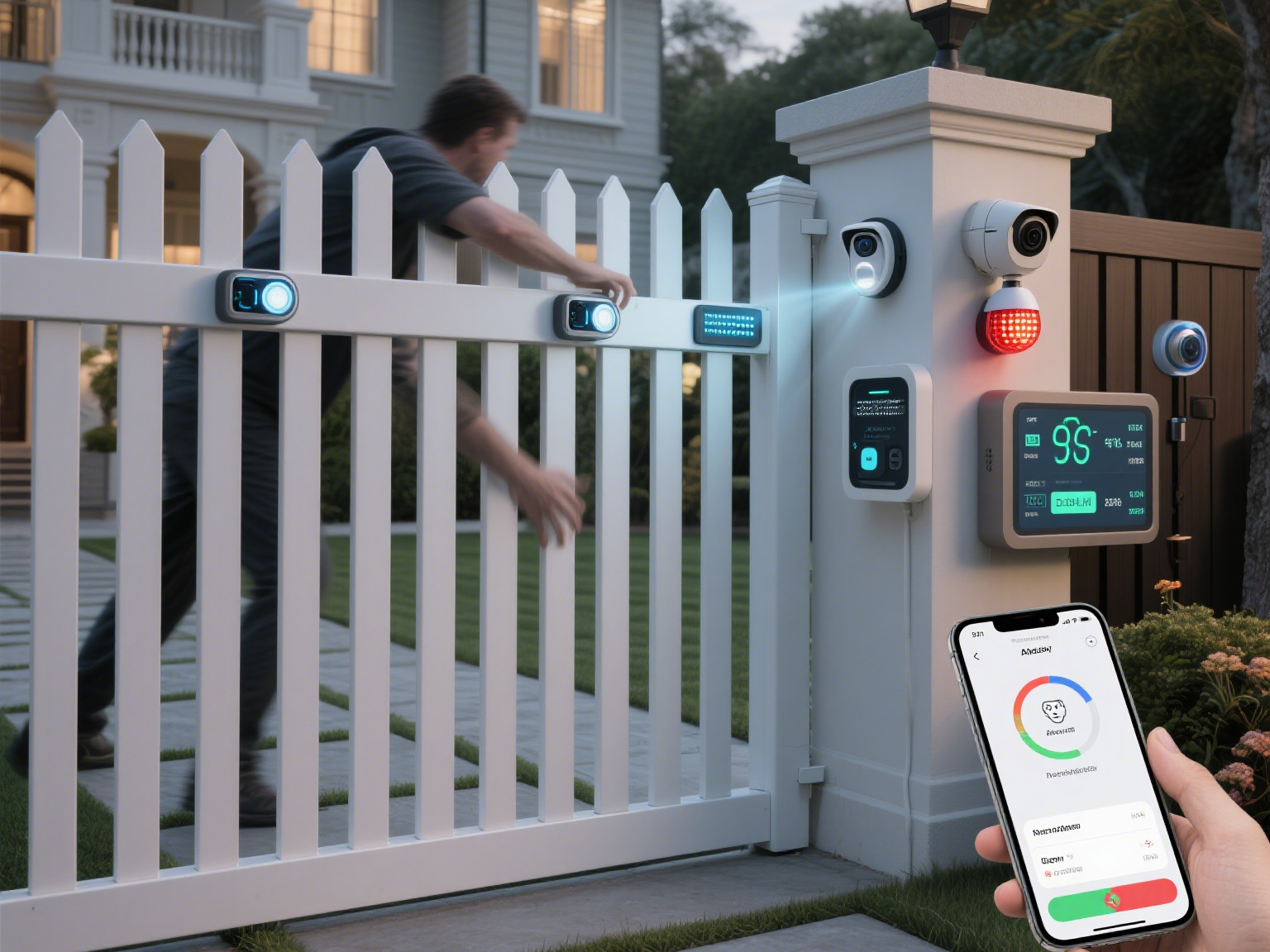
The advent of smart PVC fencing systems has completely subverted the traditional single function of fences as mere physical barriers. Today, with the deep integration of Internet of Things (IoT) technology and sensor technology, PVC fences are gradually evolving into intelligent terminals with perception, analysis, and feedback capabilities.
In terms of security protection, advanced motion sensors and infrared induction devices are ingeniously embedded in the pillars and crossbars of PVC fences. When unauthorized personnel attempt to climb over or damage the fence, the sensors immediately detect abnormal vibration and displacement signals, triggering audible and visual alarms. Meanwhile, alarm information is sent in real time to the owner’s mobile terminals such as smartphones and tablets via push notifications. Some high-end smart PVC fencing systems are also equipped with facial recognition cameras that can automatically identify the identities of personnel entering the fenced area. Unfamiliar faces are automatically recorded and uploaded to a cloud management platform, providing owners with detailed security logs.
Beyond security monitoring, smart PVC fences also feature environmental monitoring functions. Temperature and humidity sensors, as well as air quality sensors, can continuously monitor environmental data around the fence. For example, in greenhouse planting areas, when the humidity sensor inside the fence detects low humidity, the system automatically activates irrigation equipment to replenish water. In industrial zones, if the air quality sensor detects excessive concentrations of harmful gases, the system immediately sends a warning to relevant departments and turns on ventilation devices. These functions not only enhance the practicality of the fences but also provide strong support for refined management in specific scenarios.
Additionally, smart PVC fencing systems can achieve more convenient functions through integration with smart home systems. Owners can remotely control the opening and closing of the fence via voice commands or a mobile app, facilitating temporary access for couriers and housekeeping staff. When there are pets at home, a virtual electronic fence can be set up: once a pet approaches the fence boundary, the system automatically emits a gentle warning sound to prevent the pet from getting lost.
2. Self-Cleaning PVC Fences: Say Goodbye to Tedious Maintenance
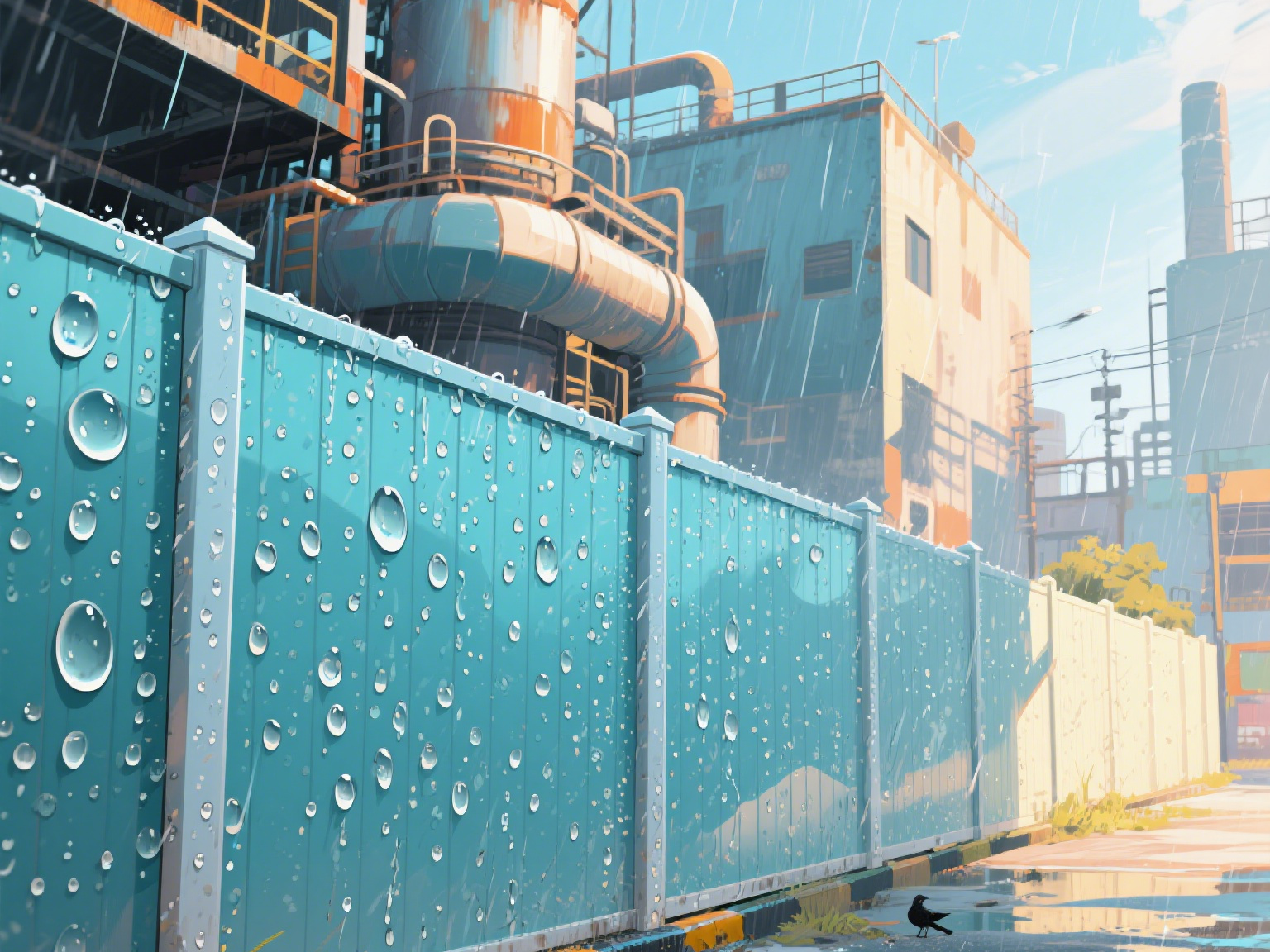
The application of self-cleaning technology represents a major leap in the maintenance convenience of PVC fences. Inspired by the self-cleaning principle of lotus leaves (“remaining unpolluted in muddy environments”) in nature, scientists have developed superhydrophobic and superoleophobic nanocoating technologies. Through the design of nanoscale microstructures, this special coating enables water droplets to form a contact angle of over 150 degrees on the surface of PVC fences, creating a “ball-rolling effect.” When it rains, water droplets roll rapidly, carrying away dust, soil, and other stains attached to the fence surface, akin to a natural “shower cleaning” for the fence.
In addition to superhydrophobic coatings, photocatalytic self-cleaning technology has also demonstrated great potential in the PVC fence sector. By adding photocatalytic materials such as titanium dioxide (TiO₂) to PVC materials, the photocatalytic materials undergo redox reactions when the fence surface is exposed to ultraviolet light, decomposing organic pollutants into harmless carbon dioxide and water. Whether it is cooking oil fumes in the air or stubborn stains like bird droppings and insect residues, they can gradually be decomposed and removed through photocatalysis, keeping the fence looking clean and new at all times.
In highly polluted areas such as urban industrial zones and main traffic arteries, the advantages of self-cleaning PVC fences are particularly evident. Previously, fences in these areas required manual cleaning every few weeks, consuming significant human and material resources. The emergence of self-cleaning PVC fences has extended the cleaning cycle to several years, greatly reducing maintenance frequency and costs. At the same time, it minimizes safety risks and environmental impacts caused by cleaning operations.
3. Sustainable Development: Green Manufacturing Processes Reshaping the Future of PVC Fences
Against the backdrop of growing global environmental awareness, the PVC fence manufacturing industry is actively exploring more sustainable development paths. In terms of raw material utilization, enterprises have improved the reuse ratio of recycled PVC materials through technological innovation. In the past, recycled PVC materials could only be used to produce low-end products due to performance degradation. Today, through advanced modification technologies such as adding toughening agents and stabilizers, the strength, weather resistance, and other properties of recycled PVC materials have been significantly enhanced, enabling them to meet the production requirements of high-end fence products. Some enterprises have even achieved 100% recycled material manufacturing for PVC fences, reducing resource consumption while effectively lowering production costs.
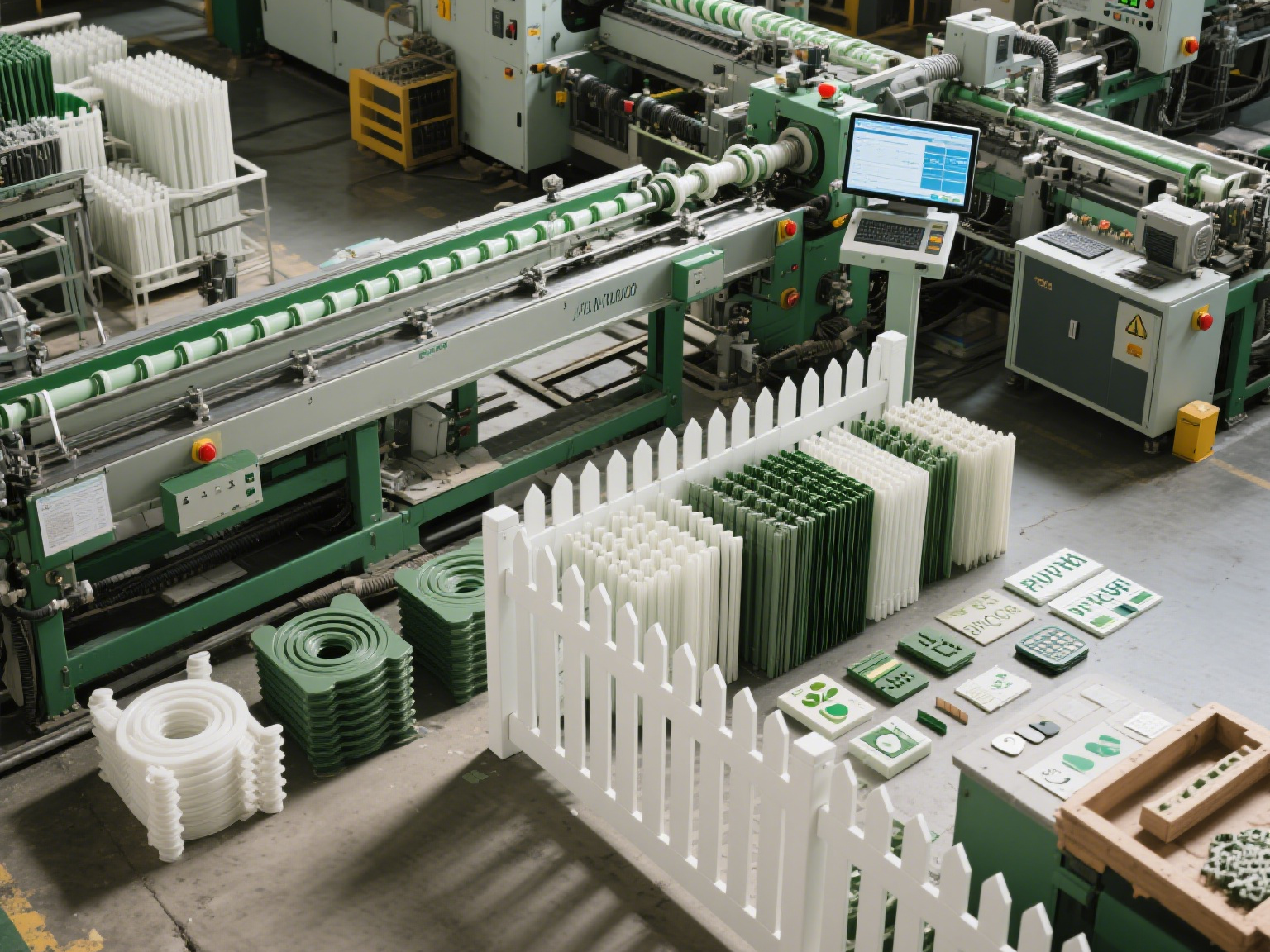
To reduce energy consumption and carbon emissions in the production process of PVC fences, new production technologies are also emerging continuously. For example, the adoption of energy-efficient extrusion molding equipment has increased energy utilization by over 30% through optimizing screw structures and heating systems. Digital production management systems are used to precisely control raw material input and production processes, reducing waste generation. Furthermore, developing biodegradable PVC formulations has become an industry hotspot. Scientists are experimenting with introducing biobased raw materials such as starch and cellulose into PVC materials, enabling them to be decomposed by microorganisms in natural environments after disposal and fundamentally solving the environmental problem of difficult degradation of traditional PVC materials.
4. 3D Printing Technology: Unlimited Possibilities for Personalized Customization
The rise of 3D printing technology has brought revolutionary changes to the design and manufacturing of PVC fences. Traditional PVC fence production relies on mold forming, which has high design modification costs, long cycles, and difficulty in meeting consumers’ increasingly diverse personalized needs. In contrast, 3D printing technology has completely broken through these limitations with its “what you see is what you get” rapid prototyping capability.
Designers can use computer-aided design (CAD) software to freely create various complex geometric shapes, hollow patterns, and artistic textures. Whether it is an oriental-style hollow lattice design or a futuristic streamlined structure, they can all be perfectly realized through 3D printing technology. For corporate users, 3D printing technology can integrate corporate logos and cultural elements into fence designs to create unique brand display walls. For household users, it can customize exclusive fence patterns according to architectural styles and personal preferences, turning fences into artworks that showcase individuality.
In terms of production efficiency, 3D printing technology also has significant advantages. For small-batch, customized PVC fence orders, traditional production methods require re-molding, which is costly and time-consuming. In contrast, 3D printing can directly produce products based on design files without molds, greatly shortening the production cycle and reducing costs. Moreover, 3D printing generates less waste, and the waste can be recycled and reused, further improving material utilization and aligning with the development trend of green manufacturing.

As these innovative technologies continue to mature and become popular, PVC fences will no longer be limited to traditional protective functions. Instead, they will adopt a more intelligent, environmentally friendly, and personalized stance, becoming an indispensable part of modern architectural and living spaces. This article has forecasted the development trends of future technological innovations in PVC fences from the above four aspects. It is believed that these technologies will also become popular in daily life in the near future. Whether in commercial venues pursuing ultimate security or family residences focusing on quality and individuality, future PVC fences will meet people’s increasingly diverse needs with a brand-new look and lead the fence industry to a new development stage.