
PVC fence panels are high – molecular composite fences primarily made from Polyvinyl Chloride (PVC). By incorporating various additives such as stabilizers, plasticizers, flame retardants, and colorants, they are manufactured through processes like extrusion, injection molding, and compression molding. These panels combine the weather resistance and corrosion resistance of plastic with the strength characteristics of metal, making them an ideal alternative to traditional iron and wooden fences.
In recent years, with the acceleration of global urbanization and the continuous improvement of people’s requirements for quality of life and environmental aesthetics, the market size of PVC fence panels has shown a sustained growth trend. According to relevant market research institutions, the global market size of PVC fence panels was approximately X billion US dollars in 2020, and it has grown to about X + 5 billion US dollars by 2024, with a compound annual growth rate of approximately 8%. It is expected that the global market size will continue to grow steadily in the next 5 – 10 years, and is有望
(expected to) reach about X + 15 billion US dollars by 2030. Especially in emerging economies such as China, India, Southeast Asian countries, and some African countries, with the vigorous advancement of infrastructure construction, the rapid development of the real estate market, and the continuous improvement of urbanization levels, the market demand for PVC fence panels will usher in explosive growth. This article aims to analyze the scenarios where PVC fence panels can be applied to improve the quality of life.
Ⅰ. Residential Homes
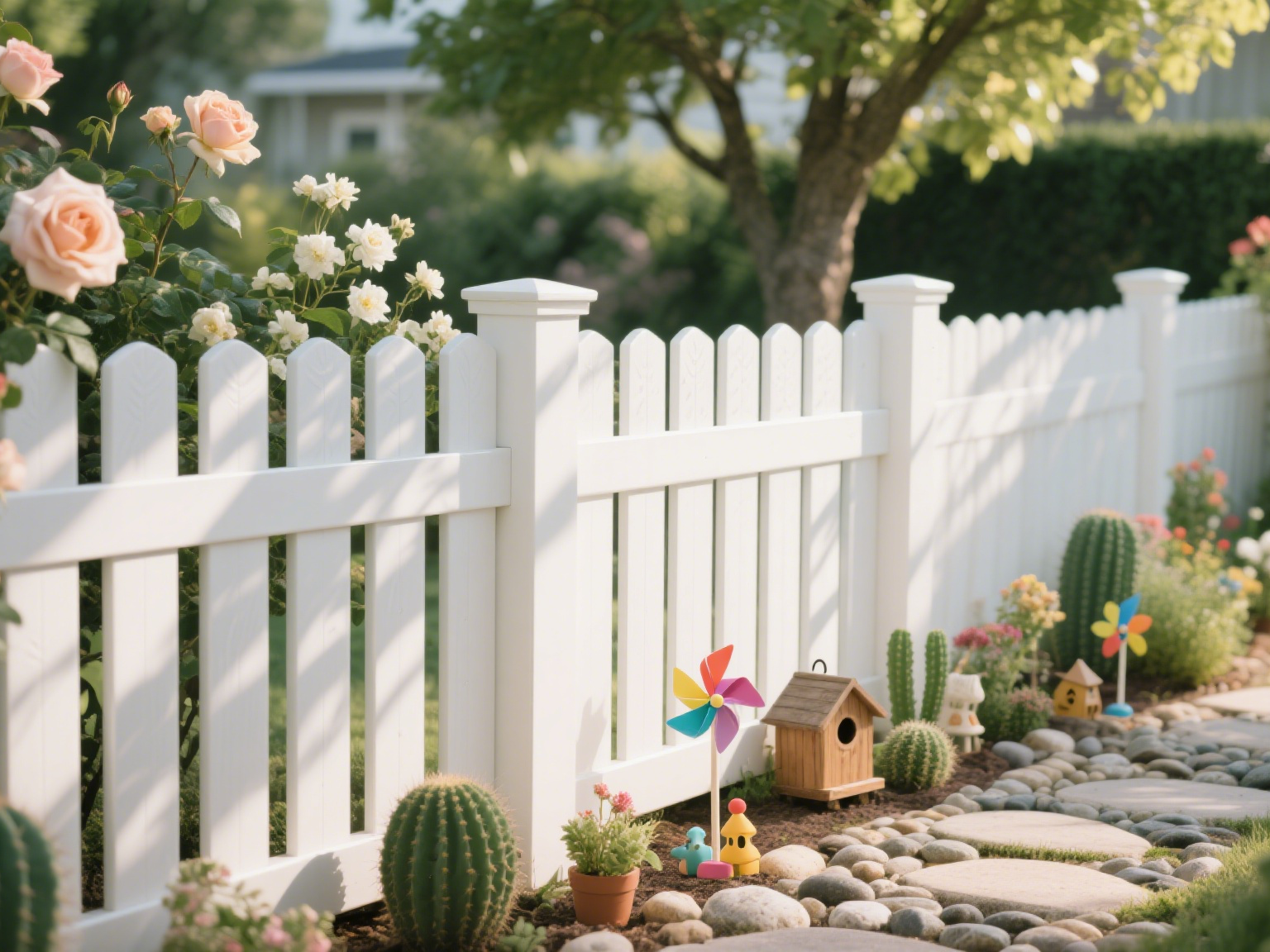
In a certain community in the United States, almost every family keeps pets, so smooth – lined PVC fence panels can be seen at the boundary of each household’s courtyard. These fences are made of food – grade PVC raw materials and have passed the EU RoHS certification, so they are safe even if pets bite them. Take a villa with a children’s room in California, USA as an example. The owner chose light gray embossed PVC fence panels. The matte surface treatment not only avoids light pollution but also increases friction through slightly convex textures to prevent children from climbing. A 10cm – high baffle to prevent cats and dogs from drilling through is installed at the bottom of the fence, and it is equipped with an automatic closing hinge door to effectively prevent pets from getting lost. The design of PVC guardrails in high – rise apartments in Tokyo, Japan is a model: the vertical bar spacing is strictly controlled at 11cm (in line with international child fall prevention standards), and a 304 stainless steel load – bearing skeleton is built in, which successfully withstood a 15 – level typhoon in wind pressure tests. Some families have also upgraded the guardrails to an “intelligent protection system” – embedded with infrared sensors that automatically trigger alarms when children approach, and at the same time, link with mobile phone APPs to push real – time images.
Ⅱ. Educational Places
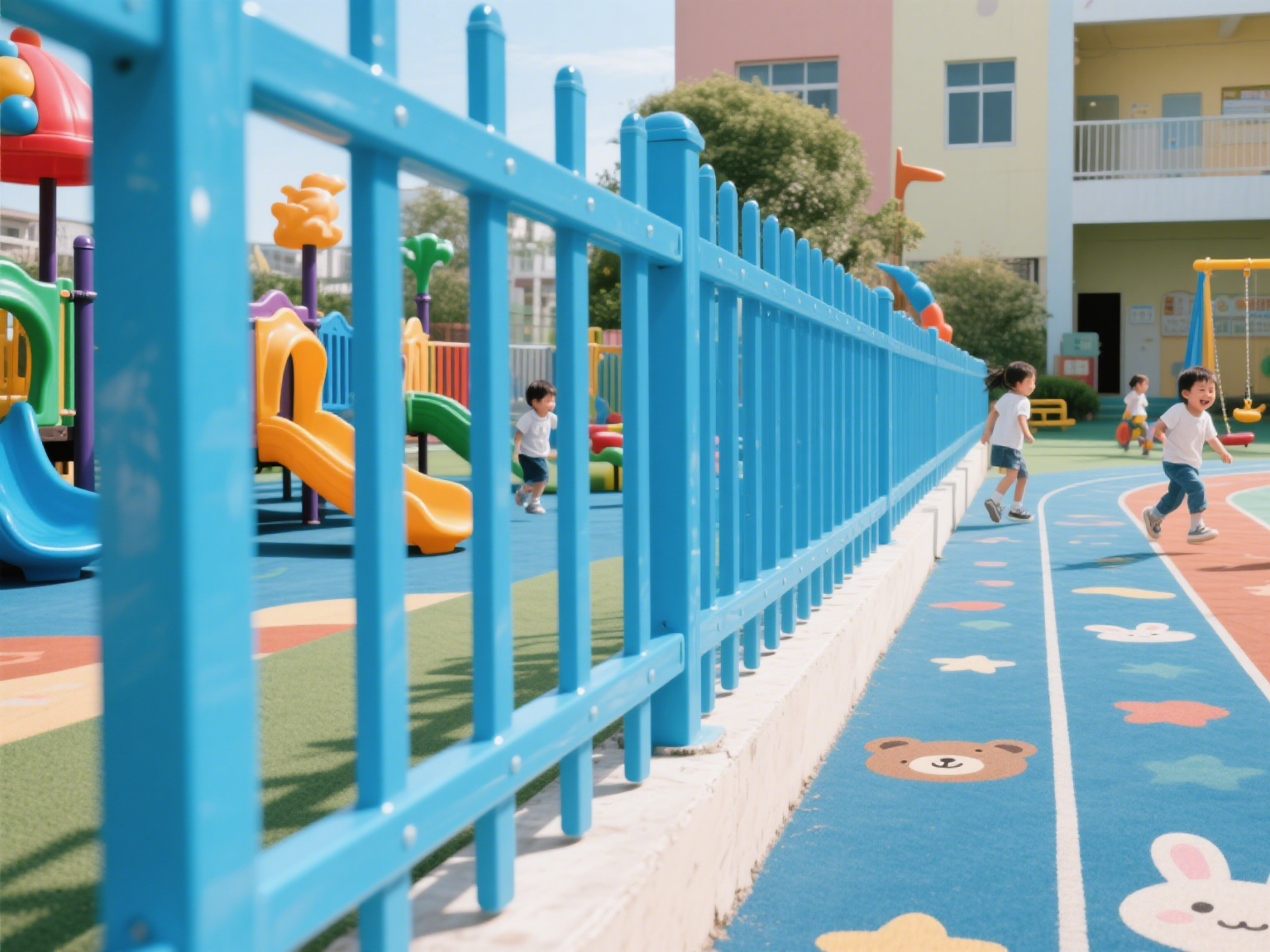
In the PVC Fence Panel upgrading project of a certain primary school in the UK, a “double – buffer” design was specially adopted: the fence columns are built in with honeycomb EVA buffer layers, and the outer layer is wrapped with 3cm – thick polyurethane crash pads, which can absorb 80% of the impact energy through testing. Color psychology experts participated in the color matching scheme: the fences around the teaching building adopt Morandi – toned lavender, which can reduce children’s heart rate by an average of 5 beats per minute according to research; the sports area fences are matched with vibrant orange and grass green to stimulate sports enthusiasm.
Ⅲ. Public Landscapes
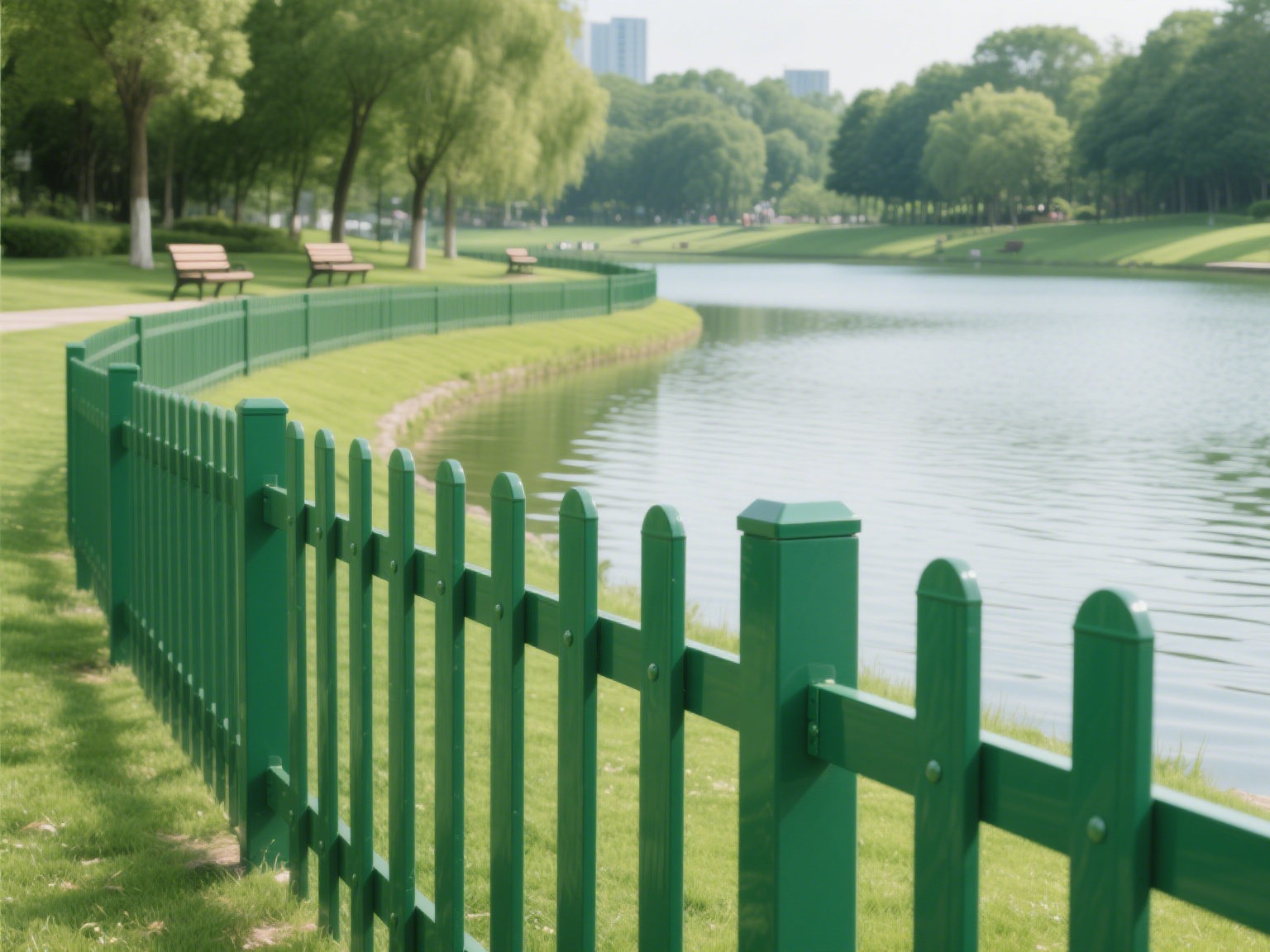
The “vertical greening fence” in Singapore’s Gardens by the Bay is a model of the combination of PVC materials and ecological design. The fence frame uses dark brown PVC with imitation bark texture, and a planting groove with a diameter of 15cm is reserved every 50cm to plant local climbing plants such as star fruit vines. It is estimated that every 100 meters of such fences can sequester 2.3 tons of carbon annually and reduce surrounding noise by 3 – 5 decibels. At night, the built – in solar LED light strips automatically turn on, forming a “plant light and shadow tunnel” that has become an online celebrity punching – in spot in the city.
Ⅳ. Special Scenarios
At the Antarctic research station, the ultra – low temperature PVC fence panels resistant to – 60℃ tested by China’s Great Wall Station have attracted attention. By adding nanoscale antifreeze additives, these fences still maintain 20% elongation at break in extreme low temperatures, successfully withstanding blizzard impacts. In the Middle Eastern desert area, the sunscreen PVC fence panels in a villa area in Dubai adopt a double – layer hollow structure, with the inner layer filled with reflective thermal insulation materials. Through testing, it can reduce the surface temperature of the fence by 22℃, effectively delaying material aging.
The true value of PVC fence panels lies in leveraging material innovation to achieve a multi – dimensional balance of “safety, aesthetics, efficiency, and ecology”. It is not only a physical space divider but also a builder of modern lifestyle and a participant in urban sustainable development. When the genes of technology and humanistic care are deeply integrated into the design of fence panels, what we see is not only the evolution of a product but also the ultimate exploration of humanity for a livable environment – in every inch of space that needs protection, PVC fence panels always protect the infinite possibilities of life in an all – round manner.