
If you are in the market for a new fence, you will definitely come across PVC fences. As a newly launched and popular product in recent years, PVC fences are quite popular in European and American countries. In addition, in some Southeast Asian countries such as the Philippines, PVC fences are gradually attracting attention and being applied. However, in fact, many customers do not understand its properties and composition, and they usually raise questions: What is so special about it? What is the difference between it and traditional fences? Why should I choose it? This article aims to provide consumers with a purchase guide for PVC fences, enabling everyone to truly understand PVC fences and make the most rational consumption choices
Definition of PVC Fences
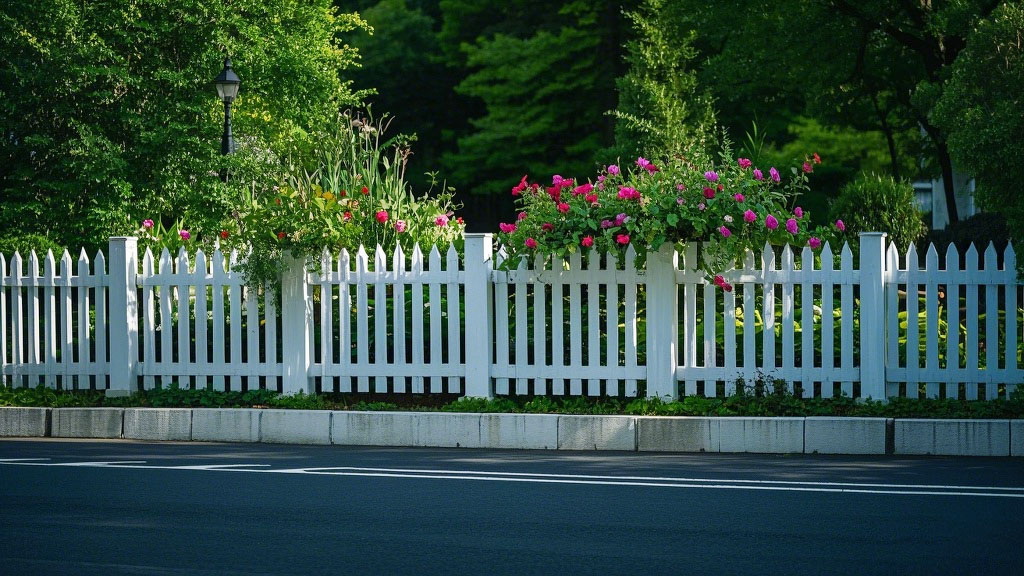
PVC fences are mainly made of polyvinyl chloride (PVC) resin as the main raw material, with an appropriate amount of additives such as stabilizers, lubricants, and fillers added. They are fences processed through an extrusion molding process. They are constructed by combining PVC resin with various additives (such as stabilizers and UV inhibitors) to improve their performance and service life. PVC is a synthetic plastic polymer known for its strength, durability, and resistance to impact and weathering. PVC fences usually consist of horizontal rails and vertical pickets or panels, which are firmly fixed together to form a sturdy structure. There are various styles of PVC fences, including privacy fences, semi-privacy fences, picket fences, and post-and-rail fences, and they are available in a variety of heights. They can also be customized to different sizes to meet various needs.

Material Characteristics
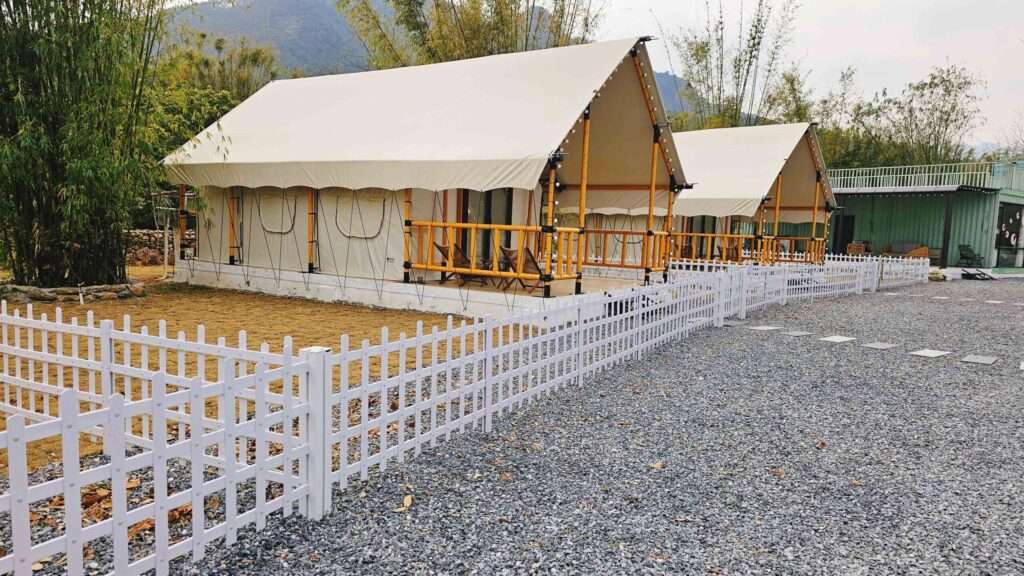
PVC is a thermoplastic. When heated to a certain temperature, it will soften and has good plasticity. At this time, external force can be applied to make it take on various shapes according to the mold or specific molding process, and it will maintain the formed shape after cooling. This characteristic enables PVC fences to be processed into various complex shapes to meet different design requirements. PVC is a durable and long-lasting material. Therefore, PVC fences have excellent weather resistance and will not fade or rust due to harsh wind and rain weather. PVC fences have strong corrosion resistance, can resist the erosion of chemical substances such as acids, alkalis, and salts, and are not easy to rust, maintaining good performance in various harsh natural environments. PVC fences are also good insulators with insulating properties and can be used in some places with high requirements for electrical safety, effectively preventing electric shock accidents. Appearance Characteristics Different from the limitations of traditional fences, PVC fences are rich in color, diverse in shape, and changeable in style, making them more aesthetically pleasing. By adding different masterbatches to the PVC material, fences of various colors can be produced, such as common colors like white, green, and black. Special colors can also be customized according to customers’ needs to meet different environmental and aesthetic requirements. This makes PVC fences widely used and highly adaptable, and they can be used not only in residential areas such as gardens but also in industrial parks and other places.
Cost-effectiveness
When purchasing this kind of home decoration, customers will definitely consider its long-term economic benefits and service life. Most of the traditional fences we usually see are made of wood or metal materials. PVC fences are not yet widely popular in the market, and they are mainly used in European and American countries and Southeast Asian regions. However, in all aspects, PVC fences are definitely the rising stars in the fence industry, and they will drive a trend of PVC home decorations. Studies have shown that wooden fences require regular maintenance and are vulnerable to rot, termites, and weather damage. Iron fences are prone to rusting and require regular rust removal by workers. In contrast, PVC fences only need to be rinsed with clean water or wiped with a damp cloth in daily use to maintain their cleanliness and beauty. The later maintenance cost is almost zero. They have excellent durability, strength, and the ability to withstand harsh environmental conditions, making them an ideal choice for many customers. Some customers may be discouraged when they see that the upfront cost of PVC fences is relatively high. However, from the perspective of long-term maintenance, not having to spend energy and money on maintaining PVC fences in the later stage is actually a kind of savings, isn’t it?
In this article, we will explore the definition, material characteristics, appearance characteristics, and cost-effectiveness of PVC fences. After reading this article, you will have a comprehensive understanding of PVC fences and be able to make an informed decision on whether to choose them to meet your fencing needs.