
Creating a unique landscape requires careful selection and matching of PVC fencing and plant stands, taking multiple factors into consideration. Here are practical suggestions to achieve this.
Different scenarios demand varying functions and styles for PVC fencing and plant stands:
1. Select Based on Scenario Requirements
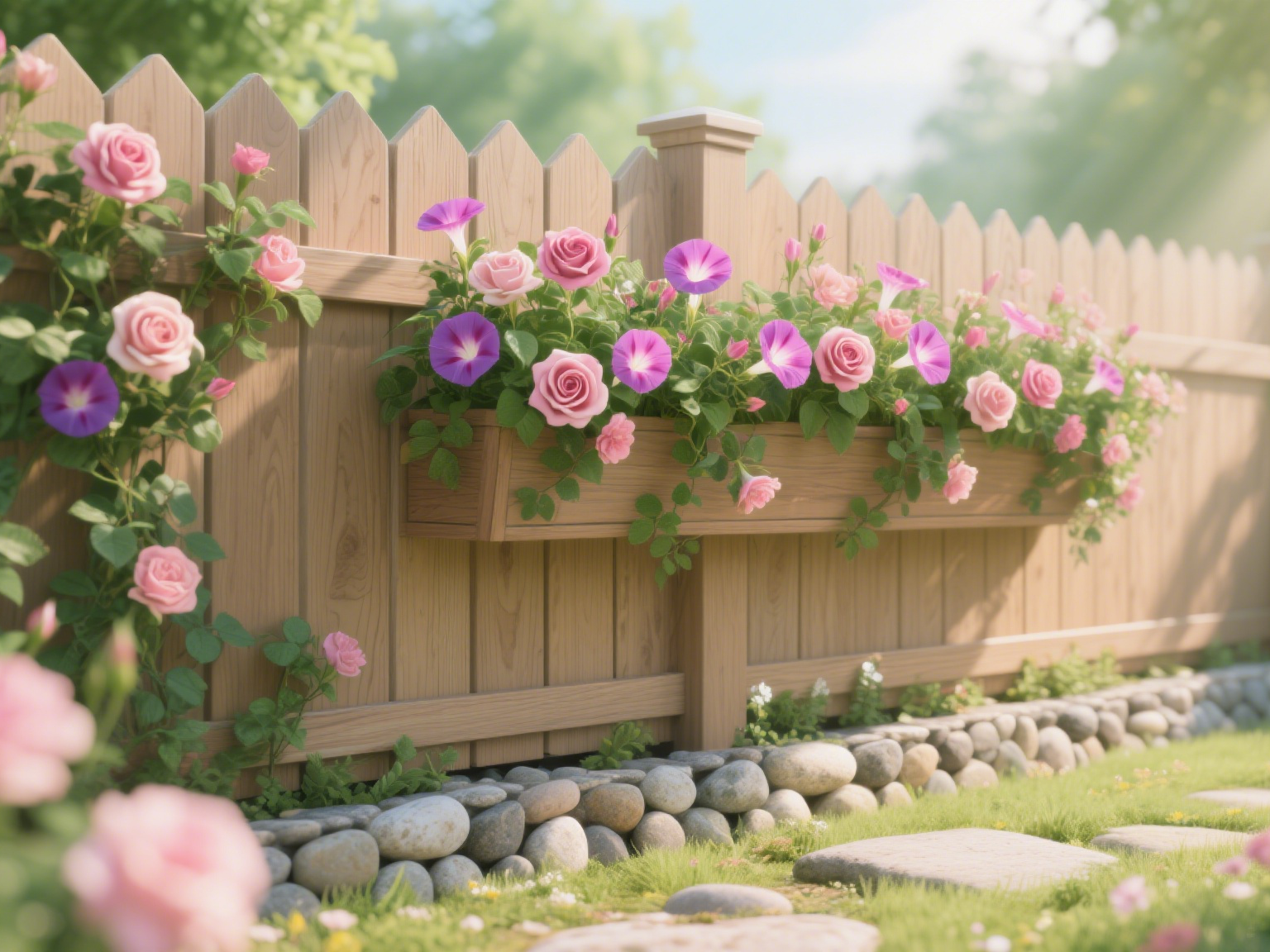
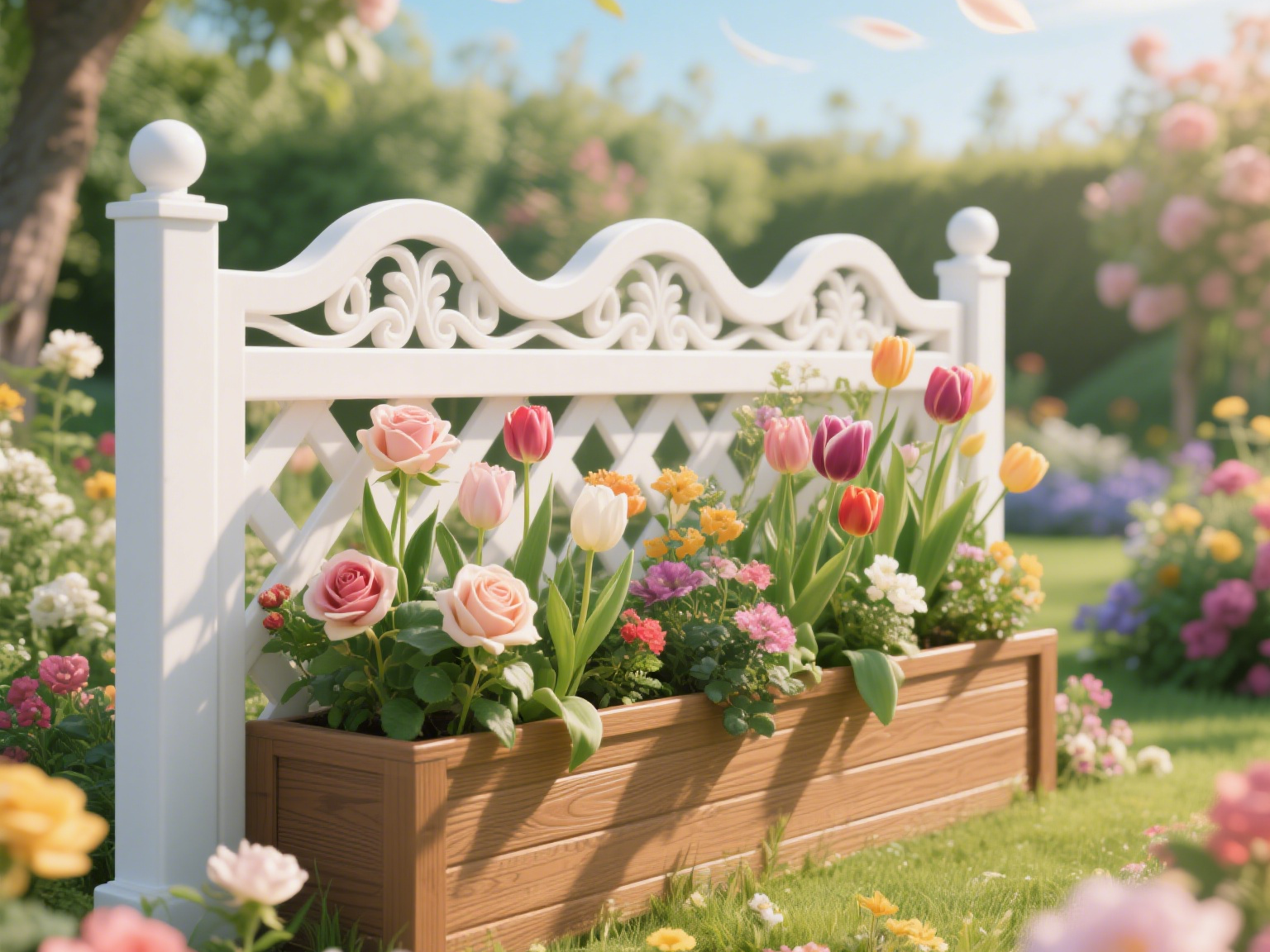
- Gardens: Fencing in gardens primarily serves to protect plants and enhance aesthetics. Opt for delicate, soft-colored styles such as wave-shaped or carved white PVC fencing. Pair them with wooden-textured PVC plant stands and plant flowers like roses or tulips to create a romantic atmosphere.
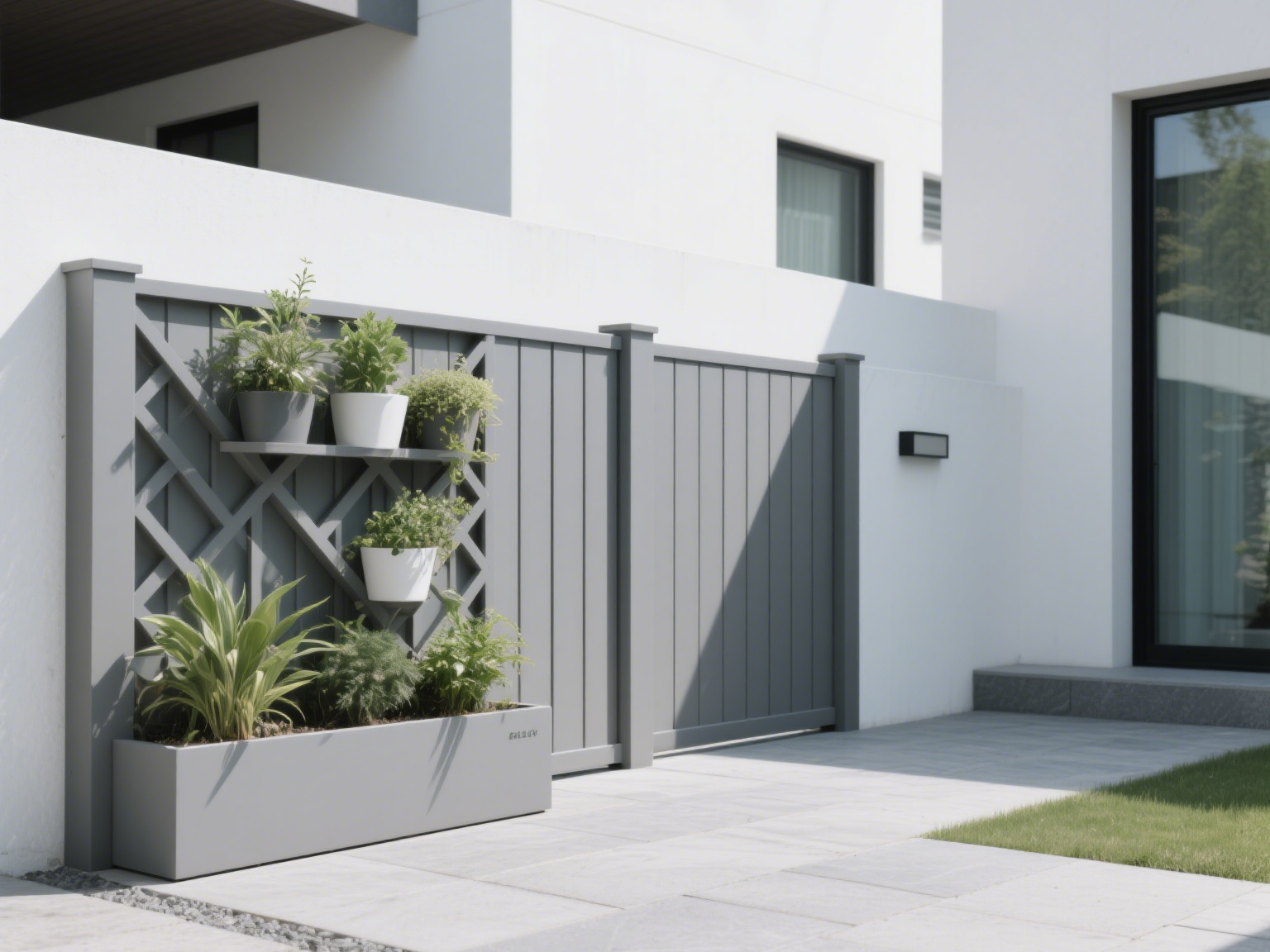
- Courtyards: Courtyard fencing must balance boundary definition and privacy. Choose a height of 1.2–1.5 meters, with colors and styles that harmonize with the courtyard’s architectural design. For modern minimalist courtyards, straight-lined, solid-color PVC fencing paired with geometric plant stands is ideal.
- Commercial Districts: In commercial areas, fencing and plant stands should attract customers. Select vibrant colors and unique shapes, such as colorful PVC fencing with multi-layered or irregular plant stands, and plant bright flowers to create eye-catching landscapes.
2. Consider Material Properties
- Standard vs. Reinforced PVC:
- Standard PVC (2–3mm thickness): Suitable for general protection and decoration at a lower cost, ideal for low-load scenarios like home balconies.
- Reinforced PVC (4–5mm thickness): Offers higher strength and stability, capable of withstanding greater impact. Suitable for high-protection environments like schools or kindergartens, though at a higher cost.
- Environmental Resistance: Prioritize corrosion-resistant PVC for coastal or humid areas, and UV-resistant materials for sunny regions to prevent fading and deformation.
3. Focus on Color and Style Coordination
- Color Matching:
- Basic colors (white, green, brown) blend naturally with surroundings, while vibrant colors (pink, blue, yellow) create visual contrasts. For example, white fencing with colorful flowers looks fresh, while green fencing complements greenery.
- Style Selection:
- Flat-panel fencing: Simple and modern, suitable for contemporary scenes.
- Picket fencing: Provides ventilation and aesthetics, ideal for the garden.
- Mesh fencing: Sturdy and protective, suitable for security needs.
- Plant Stand Styles: Multi-layered stands accommodate diverse plants, hanging stands save space, and modular stands offer flexibility.
4. Prioritize Installation and Maintenance Convenience
- Installation: Most PVC fencing uses modular designs with connecting fittings, allowing easy DIY assembly without professional skills, saving time and labor costs.
- Maintenance: Smooth-surfaced PVC products require only occasional cleaning with a damp cloth, reducing upkeep efforts compared to traditional materials.
5. Evaluate Budget and Cost-Effectiveness
PVC fencing and plant stand prices vary by specification, quality, and brand:
- Standard garden fences: ¥10–20/m
- Pet barriers: ¥15–30/m
- Courtyard fences (simple styles): Similar to garden fences; complex designs cost ¥30–50/m
- Commercial greenery fences: ¥20–40/m
Prioritize long-term value over low prices, as high-quality PVC products offer better durability and lower replacement costs.
The art of matching PVC fencing and plant stands lies in transforming functional boundaries into aesthetic elements. By aligning with scenario needs, material properties, color harmony, and practicality, you can create landscapes that are both structured and inviting. Whether for a garden, courtyard, or commercial space, the right combination turns every boundary into a starting point for unique beauty, reflecting your vision for living spaces.