
Why is PVC Fences Gradually Replacing Traditional Fences?
With the vigorous development of the construction industry in recent years, people have increasingly higher requirements for the practicality and aesthetics of fences. They expect fences to be practical and durable, as well as decent and beautiful. This undoubtedly has gradually pushed the development of PVC fences to the forefront of the market. Research has found that PVC fences have gradually replaced traditional wooden and iron fences. Why can PVC fences gradually replace traditional fences? This text elaborates from the perspectives of the performance, aesthetic value, economic cost, environmental safety, etc. of the fences.
Durable and Resistant to Wind and Rain
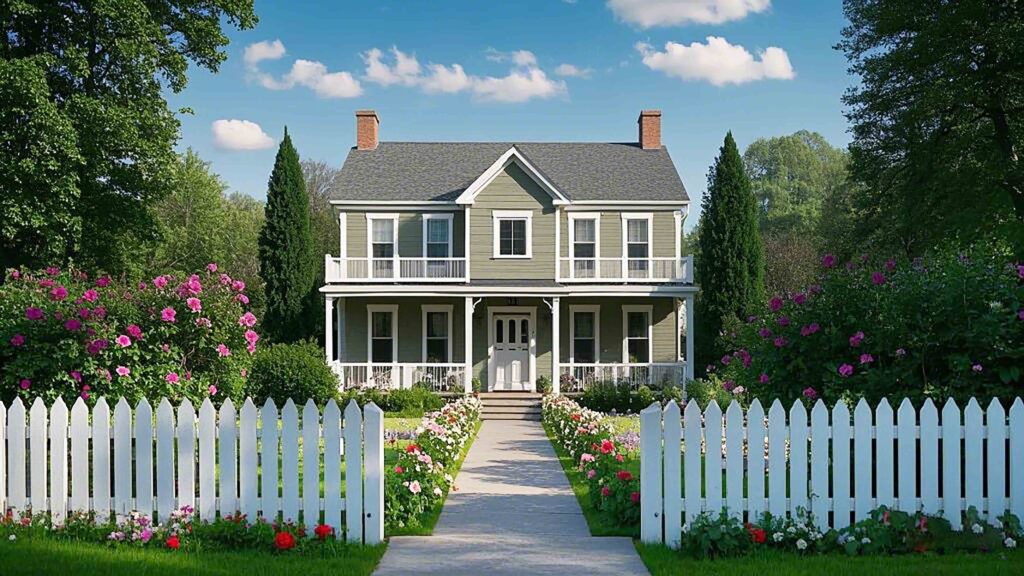
PVC fences are designed with a unique molecular structure, so they are very durable and can be used for at least five years. Compared with traditional iron fences, they can resist moisture and fire, and have excellent resistance to strong ultraviolet rays, rainwater, and extreme environments, so they will not rust or corrode. Some studies have shown that PVC fences with excellent manufacturing processes can have a service life of up to 30 years in outdoor environments, far exceeding that of traditional fences. In 2013, an elementary school in New York City installed PVC fences around its playground. These fences have withstood the wear and tear caused by the daily use of children, and at the same time, they have to cope with the changeable weather in the city, including snowfall in winter and rainfall throughout the year. Over the past 12 years, the PVC fences have performed excellently. The rounded corners of the PVC components, which are designed for safety reasons, have not become sharp or fallen off. The fences have not rusted, and their colors are still vivid. During this period, the school did not need to invest a large amount of money in fence maintenance or replacement, allowing it to allocate resources to other educational needs.
Aesthetically Diverse and Flexibly Designed
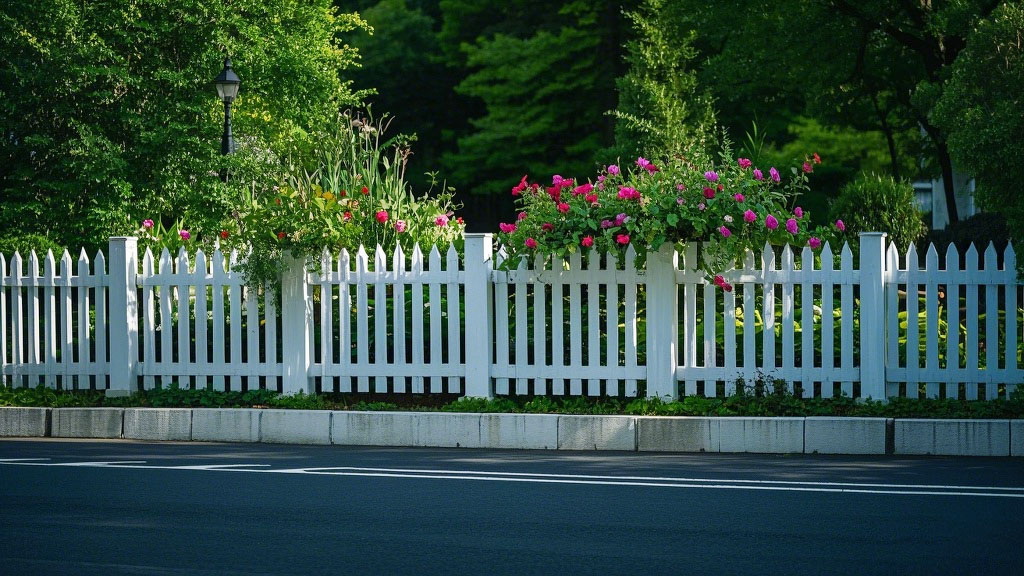
PVC fences can be made in a wide variety of colors, which are bright and rich. Compared with traditional fences, they have higher aesthetic value and greater plasticity, and can meet the needs of different customers and match different environments. The lines of PVC fences are simple and clear, and they have strong flexibility. They can be made into various shapes with arcs and curves and can match different architectural styles. They can be made into mesh types, fence types, and slat types. In addition, PVC fences have rich shapes and are suitable for a wide range of occasions, such as wedding scenes, horse farms, residential gardens, etc. Modernly designed PVC fences can express personal styles while maintaining the functions of the fences.
Low-cost Maintenance and Cost-saving
When purchasing fences, the initial purchase cost of PVC fences may be higher than that of fences made of other materials, which often makes customers hesitant. However, in the long run, PVC fences have economic advantages compared with traditional fences. Because traditional wooden fences need to be dyed and repainted regularly, and metal fences need to be derusted regularly. The material of PVC fences is insect-proof, fire-proof, corrosion-resistant, UV-resistant, and recyclable. The smooth surface can be cleaned simply by washing with water, which greatly saves the maintenance cost and labor cost. Even in high-temperature and humid environments, PVC fences can maintain good performance and almost have no post-maintenance costs. Even if there are any, the average annual maintenance cost is very low. Suppose a park has a 1000-meter-long fence. Cleaning the wooden fence may require 5-10 man-hours, while cleaning the PVC fence only requires 2-3 man-hours. Calculated at 200 yuan per person per day, each cleaning can save 600-1400 yuan.
Safely Use and Environmentally Friendly
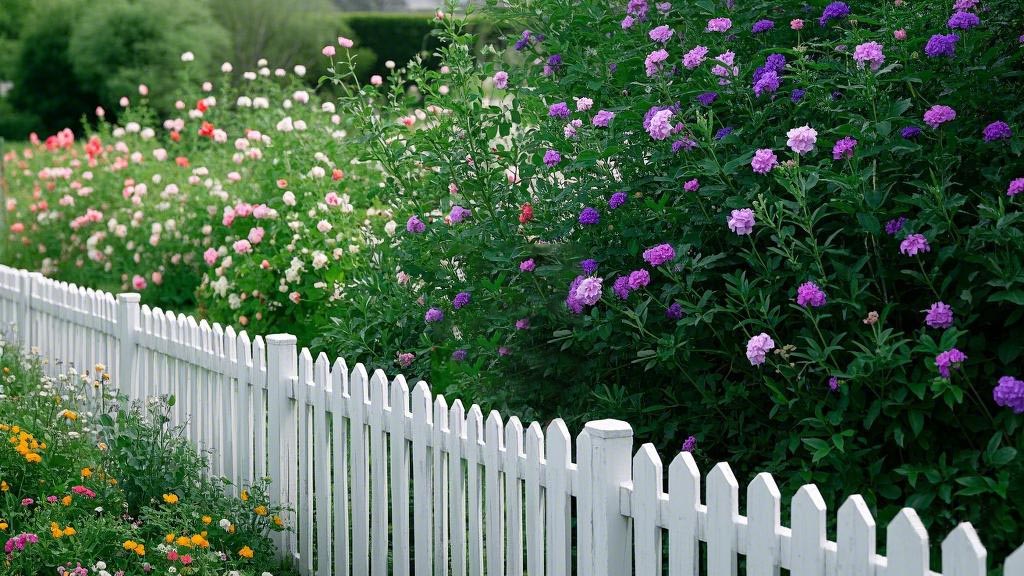
From the perspective of safety, the edges of PVC fences are relatively blunt, providing flexibility and impact resistance, which can prevent people from being scratched or stabbed when accidentally touching the fences, especially providing better safety protection for active groups such as children. From an environmental protection perspective, PVC fences are a recyclable material. Compared with some traditional fence materials, PVC fences generate relatively fewer pollutants during the production process, which is in line with the current international trend of green protection and also saves the development of wood and metal resources.
In conclusion, PVC fences have revolutionized the fence industry with their durable performance, cost-effectiveness, design flexibility, safety features, and other characteristics. As the demand for high-quality and sustainable fence solutions continues to grow, PVC fences will play a more important role in the future.